

Introduction
Picture a high-stakes rescue: a crushed vehicle, cramped space, and seconds that actually matter. The spine board still earns its place—used smarter. Carbon-fiber boards modernize a classic: you get the same spinal protection with less weight, greater stiffness, and near-invisibility on X-ray/CT. In plain English, that means safer lifts for crews and cleaner images for clinicians. Below, we unpack what carbon-fiber spine boards are, how they fit today’s spinal motion restriction (SMR) approach, and why Jiekang’s Spine Board makes sense for international distributors.
What Carbon Fiber Changes
The mission hasn’t changed: maintain neutral alignment during extrication and early transport. What’s changed is how we deploy boards. Modern guidance favors SMR—selective use of a backboard for short, critical moves and timely transfer to the cot—over “board everyone, leave them there.” If you want the quick refresher, see the SMR overview in StatPearls and the ACS Best-Practices guideline.

Carbon Fiber vs. Traditional Boards: Three Benefits that Matter
1) Lighter lifts → safer crews
Compared with typical plastic/wood boards, carbon-fiber models often trim ~30%+ of the weight. Less mass means steadier stair carries, cleaner cornering, and lower cumulative strain on responders over a long shift. SMR assumes real-world movement still happens; taking weight off the tool helps keep it safe. (See SMR principles for how boards and cots work together.)
2) High stiffness without the “necessary” heft
Carbon-fiber composites deliver a high strength-to-weight and stiffness-to-weight ratio. A well-built board holds adult/bariatric loads (≈150–250 kg) without the flex that unnerves crews or patients. The shell resists water, blood, and common disinfectants—built for the bumps, drags, and weather EMS gear sees daily. (Use your own chemical-compatibility list to finalize disinfectant SOPs.)
3) Radiolucent by design → cleaner, faster imaging
Legacy boards can throw artifacts that obscure fractures and force retakes. Carbon-fiber’s radiolucency keeps hardware from muddying the view, so ED teams can often image through the board and skip an extra transfer. An open-access study specifically measured how immobilization devices degrade CT image quality—useful context for your radiology and ED colleagues.

Product Snapshot: Jiekang Carbon-Fiber Spine Board
Why it resonates with EMS buyers—and with distributors:
- Ultra-light yet full-size
About ~5 kg class with a full adult footprint, making two-person carries smoother and single-provider repositioning more controlled. - Real load capacity
≈250 kg working load keeps rigidity under heavy patients; stability you can feel during stair work and narrow-hallway turns. - Fully radiolucent, metal-free
Designed for X-ray/CT visibility and MRI-safe workflows (no metal parts). Fewer mid-journey transfers, fewer “lift and slide” pain points. - Field-ready details
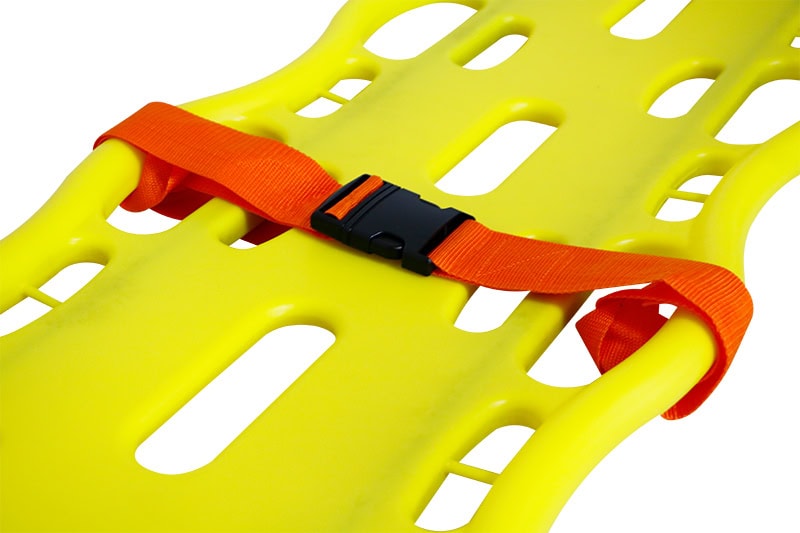
Perimeter handholds for gloved grips, smooth cleanable surface, buoyant construction, and compatibility with standard straps and head immobilizers—so crews plug it into current SOPs without a learning curve. - Compliance you can bid with
Manufactured under ISO 13485; CE-marked; FDA registration information available for U.S. import dossiers. Pair the device with SMR-aligned training so purchasing and clinical teams see one coherent story.
Explore the broader rescue line (spine boards, stretchers, immobilization accessories):
https://jiekangrescue.com/spine-board/
Built for Modern Workflows (and your tender packet)
- Aligned with SMR: Use the board for extrication and short moves, transfer to the cot, and—when appropriate—image through the board to reduce handling. (See StatPearls + ACS for policy language and training cues.)
- Shorter door-to-diagnosis: Radiolucency means fewer interruptions between triage and imaging, less patient motion, and a cleaner read for radiology. (See the CT image-quality study for evidence to share with hospital partners.)
- No exotic ecosystem: Standard strap patterns and head-block geometry mean you don’t have to re-buy your immobilization suite or rewrite your whole manual.
Distributor Advantages
- Regulatory readiness: ISO 13485 quality system, CE marking, and FDA registration info streamline EU/U.S. entries and public tenders.
- OEM & branding options: Logo, colorways, accessory bundles, and packaging—build your private-label line without re-engineering the product.
- One-stop upsell: Bundle the board with ambulance stretchers, head immobilizers, and straps to raise total solution value and repeat purchase rates.
- Sales enablement on day one: Spec sheets, hi-res media, demo clips, and IFUs ready to hand to procurement and training teams.

Conclusion & Next Step
Carbon-fiber boards like the YJK-F15 keep the immobilization, drop the weight, and stop fighting the X-ray. That’s safer for crews, faster for EDs, and better for patients.
Company home : https://jiekangrescue.com/