

Modern emergency care runs on more than skill and protocols – it also depends on whether you chose the right stretcher for the job. From wheeled ambulance stretchers to lightweight folding stretchers and spine boards, each structure has its own role, limits, and ideal application.
This guide walks through the main types of medical stretchers, their structural features, typical use scenarios, and some practical procurement tips. It’s written for hospitals, EMS providers, fire and rescue teams, and government buyers who need to plan a stretcher mix that actually fits real-world use instead of just filling a catalog.

Overview of Main Medical Stretcher Types
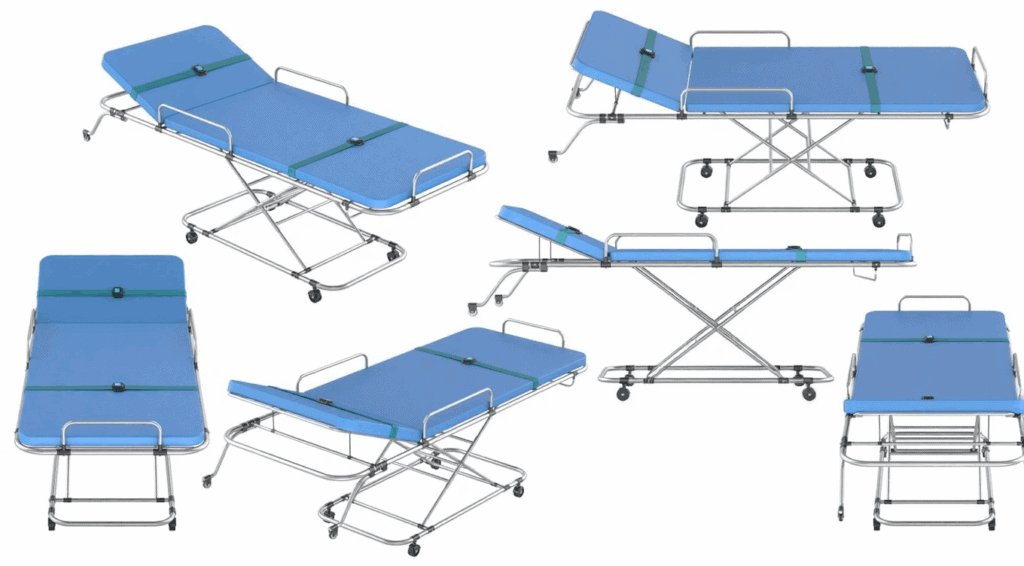
Medical stretchers can be broadly divided by structure and use into several categories: wheeled stretchers, folding stretchers, spine boards, scoop stretchers, and stair stretchers.
- Wheeled stretchers
Typically height-adjustable metal frames with four swivel casters and brakes. They are used for rapid patient transfer inside hospitals (wards, emergency departments) and in ambulances. - Folding stretchers
Built with an aluminum alloy frame and a durable fabric or leather surface. They fold lengthwise, making them lightweight, compact, and easy to carry or store. - Spine boards (board stretchers)
Rigid, one-piece boards made mostly from PE plastic or composite materials. They are strong, X-ray friendly, and used with straps to immobilize and transport patients with suspected spinal injuries. - Scoop stretchers
Made from two metal or plastic halves connected by hinges. They can be separated, slid under the patient from both sides, and locked together, avoiding the need to roll the patient. - Stair stretchers and evacuation chairs
Include simple stair stretchers, evacuation chairs, and powered stair chairs. They usually feature foldable aluminum structures with wheels, tracks, telescopic poles, or handles, designed specifically for building rescues and narrow stairwells.
Typical Application Scenarios
1. Emergency Transport (Pre-Hospital and In-Hospital)
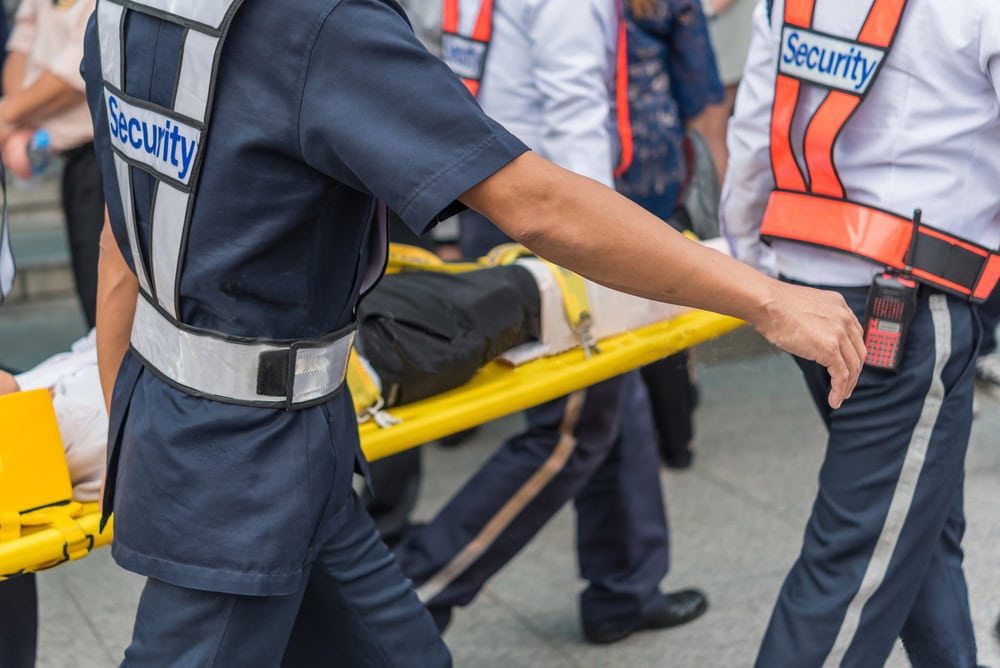
When patients must be quickly moved from an accident scene or stairwell to an ambulance or hospital bed, wheeled stretchers and folding stretchers are the go-to solutions.
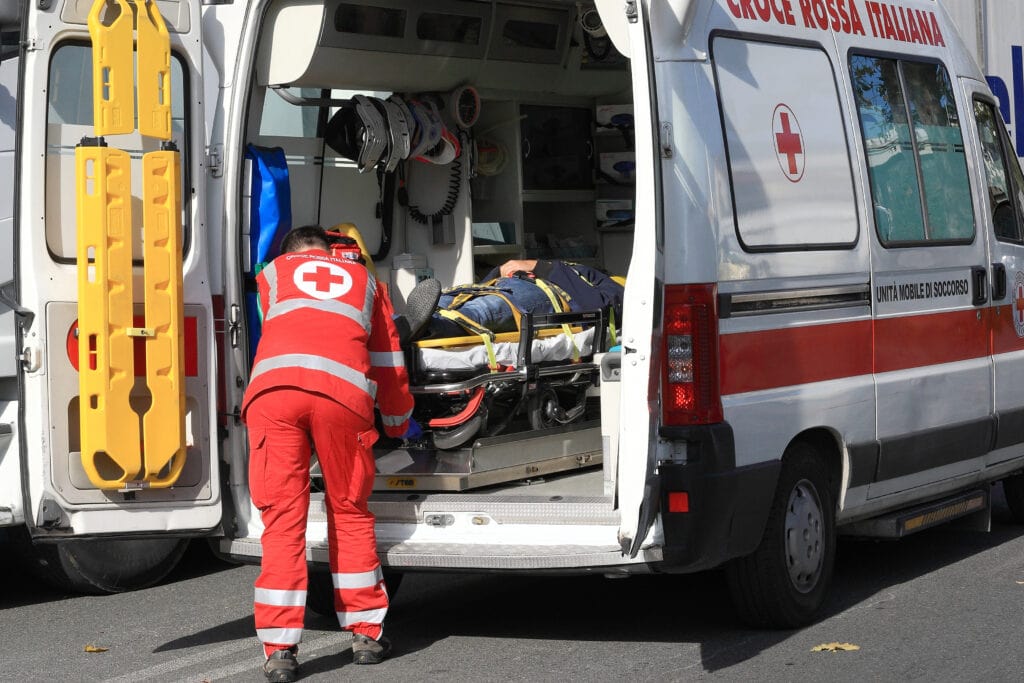
Inside the ambulance, a height-adjustable wheeled stretcher with a locking mount system is standard, ensuring the stretcher remains secure while driving. Folding stretchers act as backup devices in emergency kits, ideal for use in outdoor areas, on roads, or on staircases where a wheeled stretcher cannot easily reach.
2. Building Rescue and Evacuation
In high-rise buildings, narrow stairwells, and locations without elevator access, stair stretchers, evacuation chairs, and tracked stair chairs are essential.
Fire and emergency teams can use lightweight stair stretchers to let two rescuers quickly carry a patient. Tracked or powered stair chairs are particularly helpful for longer stair runs and for heavier or non-ambulatory patients, significantly reducing physical workload.
3. Disaster Sites and Difficult Terrain
In earthquakes, floods, landslides, and similar disasters, terrain is often uneven and unpredictable. Lightweight folding stretchers or basket stretchers allow multiple rescuers to share the load and navigate over rubble, ditches, and other obstacles.
When cervical or spinal injury is suspected, spine boards or vacuum mattresses should be prioritized for immobilization. In situations where rolling the patient is unsafe, scoop stretchers can first be used to “lift” the casualty out of a confined or unstable space before further immobilization.
4. In-Hospital Patient Transfers
For transfers between wards, operating rooms, ICUs, and imaging departments, wheeled stretchers with side rails and locking casters are the standard.
Hospital stretchers must tolerate heavy daily use while remaining easy to clean and compatible with a range of disinfectants. They also need to interface smoothly with hospital beds, CT/MRI tables, and other equipment to reduce transfer steps and risks.

Quick Type Comparisons
Wheeled Stretchers vs Folding Stretchers
Wheeled stretchers – best for:
Long-distance, high-frequency transfers inside hospitals and ambulances.
- Strengths
- Can be pushed by a single operator
- Adjustable height improves ergonomics and patient comfort
- Integrates smoothly with ambulance mounts and hospital beds
- Limitations
- Larger and heavier
- Poor adaptability on stairs and in very tight spaces
Folding stretchers – best for:
Field rescue, military use, emergency stockpiles, stairwells, and other space-limited environments.
- Strengths
- Lightweight and foldable, easy to carry and store
- Ideal as backup equipment in vehicles or disaster depots
- Limitations
- Usually require two or more people to carry
- Long-distance transport relies heavily on manual effort
Spine Boards vs Scoop Stretchers
Spine boards
- Strengths
- Simple structure and relatively low cost
- High strength and X-ray compatibility
- Excellent for spinal immobilization and imaging
- Limitations
- Patient placement often requires rolling or log-rolling, which can be risky for severe trauma or heavy patients
Scoop stretchers
- Strengths
- Can be slid under the patient with minimal rolling, reducing disruption to fractures and internal injuries
- Very efficient for on-scene transfers, especially in confined spaces
- Limitations
- More operational steps and requires proper training
- Incorrect use can pinch skin or soft tissue
In short, spine boards focus on immobilization + imaging compatibility, while scoop stretchers excel at rapid on-scene transfer with minimal movement. In most modern systems, both are used side by side, each with a clearly defined role.
Procurement Tips and Selection Ideas
When planning stretcher procurement, it helps to evaluate needs from several angles.
1. Use Scenarios
- Ambulance fleets and transfer centers:
Prioritize height-adjustable wheeled stretchers with secure locking systems, plus folding or scoop stretchers as backup. - Hospital wards and ORs:
Focus on adjustable height, patient comfort, and easy cleaning. Smooth surfaces, strong frames, and good mattress support matter. - Fire and emergency management departments:
Emphasize lightweight, foldable stair stretchers, folding stretchers, and basket stretchers that can be carried into buildings or across rough ground. - Disaster stockpiles:
Look for versatile models that can serve multiple scenarios and remain reliable after long storage.
2. Key Technical Indicators
- Safe working load and safety factor
- Material durability and corrosion resistance (aluminum alloy, stainless steel, HDPE, etc.)
- Completeness of safety features (side rails, belts, head supports, footrests)
- Compatibility with existing ambulances, beds, and mounting systems
- Ease of disinfection, maintenance, and parts replacement
3. Budget and Lifecycle Cost
Instead of looking only at unit price, consider total cost over the full life of the stretcher: service life, maintenance costs, spare parts availability, and warranty support.
For high-usage departments like emergency, ICU, and ambulance services, choosing robust, easy-to-maintain mid- to high-end models often works out cheaper than constantly replacing low-cost, low-durability options.
Planning Your Stretcher and Emergency Equipment Mix
If you’re planning stretcher and emergency equipment procurement for a hospital ED, ambulance fleet, fire and rescue team, or government reserve, the stretcher types in this article—wheeled stretchers, folding stretchers, spine boards, scoop stretchers, stair stretchers / evacuation chairs, and common accessories—are all available from manufacturers like Jiekang with proven export experience.
Share your use scenarios, target countries, and approximate quantities, and we can help you sort out a practical model mix from the factory side, bundle it by project, and quote at factory-direct pricing with support for small trial orders. That way, you can compare options faster, fine-tune tender specs, and build an annual procurement plan that truly matches real-world rescue and patient transport needs.