

Introduction
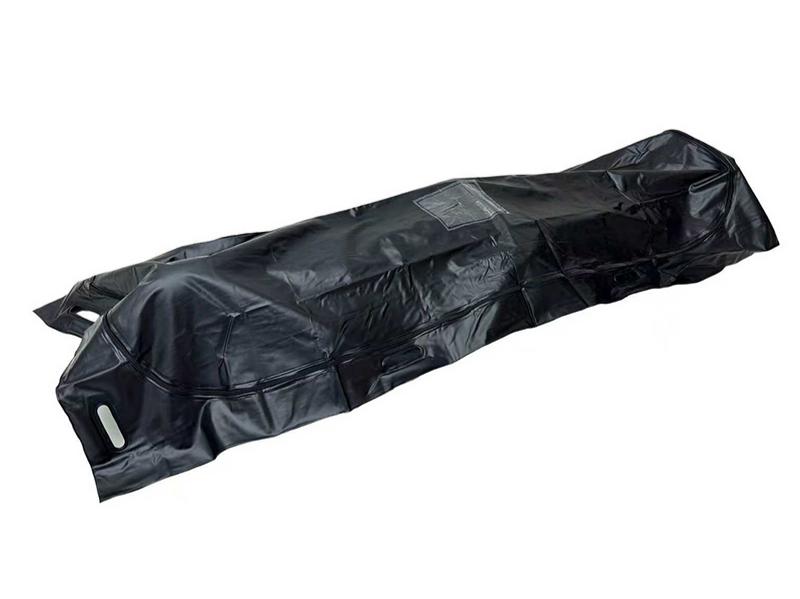
A mortuary body bag is a specialized containment bag used for the respectful transport, temporary storage, and controlled handling of human remains in hospitals, morgues, funeral services, forensic settings, and emergency response operations. Its purpose goes beyond simple containment. A well-designed bag helps reduce the risk of fluid leakage, supports safer lifting and transfer, and makes identification and documentation easier during transport and storage. WHO guidance for emergency medical teams notes that the deceased should be placed in a nonporous body bag, while CDC guidance for high-risk infectious remains stresses leak prevention and robust seam construction.
For buyers, the key is not choosing the “thickest” product on paper. The better approach is to match the bag to the real use case. Routine hospital transfer, mortuary storage, bariatric handling, pediatric care, and disaster response may all require different combinations of material strength, seam type, handle reinforcement, zipper design, and identification features. FEMA planning documents also note that mass fatality preparedness includes planning for body bag demand and related mortuary supplies.
What Is a Mortuary Body Bag?
A mortuary body bag, sometimes called a cadaver bag or corpse pouch, is a sealed bag designed to hold and move human remains safely and respectfully from one location to another. In professional settings, buyers generally look for the following functions:
- fluid containment
- secure closure
- safe lifting support
- identification support
- compatibility with stretchers, trays, and transport systems
In higher-risk scenarios, bag construction matters a great deal. CDC guidance for viral hemorrhagic fever remains specifies body bags with factory heat-sealed or welded seams, not sewn seams, and a zipper positioned on top to reduce leakage risk. That does not mean every facility must buy the same design for all situations, but it does show which structural details become especially important when leakage control is critical.
Main Types of Mortuary Body Bags
1. Standard Mortuary Body Bags
These are commonly used in hospitals, morgues, and funeral homes for routine transport and short-term storage. They usually include a zipper closure, integrated handles, and a standard adult size.
2. Heavy-Duty or Disaster Body Bags
These are built for more demanding environments, such as disaster response, field recovery, or higher-weight handling. They often feature stronger materials, reinforced handles, and more durable seam construction.
3. Leak-Resistant or Leak-Proof Body Bags
These are intended for situations where fluid containment is especially important, such as trauma cases, decomposition, or infectious disease protocols. WHO and CDC guidance both support non-porous containment and leak prevention when exposure to body fluids is a concern.
4. Body Bags with ID Pocket or Viewing Features
Some bags include a clear ID pouch or document sleeve. This helps staff attach identification without reopening the bag and supports traceability during transfer and storage.
5. Pediatric and Bariatric Body Bags
These are designed for special size ranges. Pediatric bags improve fit for infant and child cases, while bariatric bags provide additional size and handling support for larger remains.
Quick Comparison Table
| Type | Typical Material | Main Features | Common Use |
|---|---|---|---|
| Standard mortuary bag | PE, PVC, or similar polymer | Zipper, handles, ID area | Hospital or morgue transfer |
| Heavy-duty bag | Reinforced polymer or coated material | Stronger seams, extra handles | Disaster response or high-load handling |
| Leak-proof bag | Non-porous barrier material | Sealed seams, secure closure | Trauma or infectious-risk handling |
| Pediatric bag | PE or PVC | Smaller dimensions | Infant or child cases |
| Bariatric bag | Reinforced PE/PVC or laminate | Larger size, higher load support | Bariatric transport |
Key Specifications Buyers Should Check
1. Material
Common body bag materials include polyethylene (PE), polyvinyl chloride (PVC), and coated or laminated barrier materials. The practical questions are:
- Is the material non-porous?
- Is it suitable for leak control?
- Does it resist tearing during lifting and transfer?
- Can the outer surface be wiped down if needed?
Material names alone do not tell the full story. Performance depends on both the material and the way the bag is constructed.
2. Thickness
Thickness is often shown in mil or microns (μm). This is useful, but thickness should not be treated as the only quality indicator. A thicker bag with weak seams may perform worse than a slightly thinner bag with better welding, stronger handles, and a more reliable closure.
CDC’s high-risk guidance references a multi-layer system that includes a top body bag of at least 6 mil (152 μm) and a bottom layer of at least 18 mil (457 μm) in certain specialized situations. WHO emergency medical team guidance also calls for a nonporous body bag and associated leak-control measures. These examples are best understood as risk-based guidance rather than a one-size-fits-all purchasing rule.
3. Seam Construction
This is one of the most important but often overlooked specifications. Where fluid containment matters, heat-sealed or welded seams are generally preferred over sewn seams. CDC explicitly states this for high-risk infectious remains because sewn seams may create leakage points.
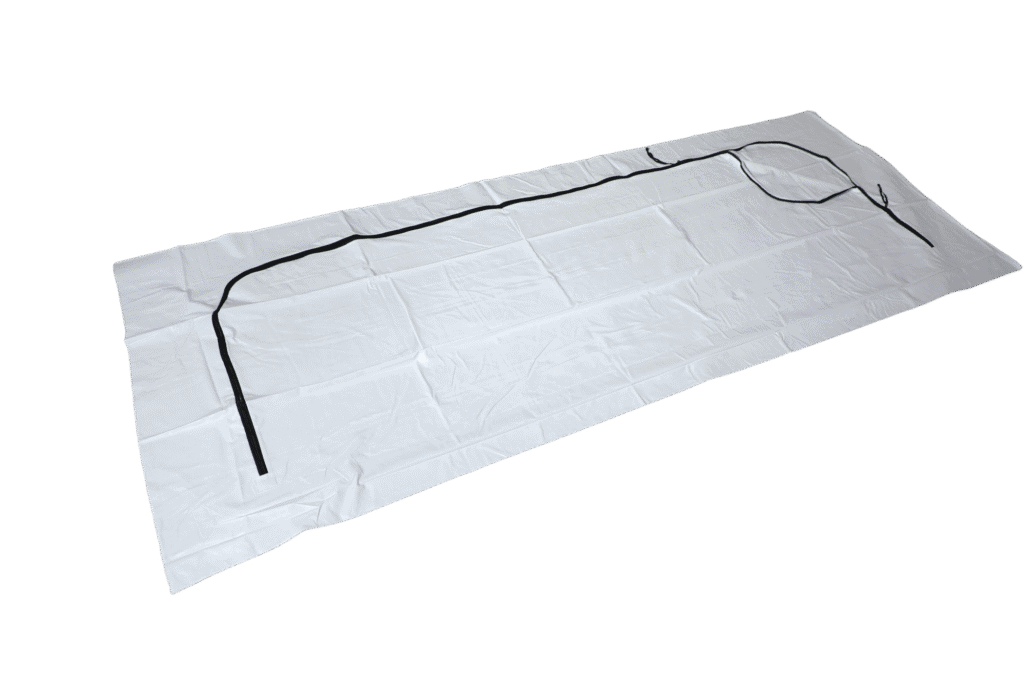
4. Zipper or Closure Design
A closure system should be easy to operate, fully secure, and resistant to opening during movement. Buyers often look for:
- full-length zipper access
- heavy-duty zipper construction
- smooth opening and closing
- secure alignment with no gaps
- optional tamper-evident sealing if required by procedure
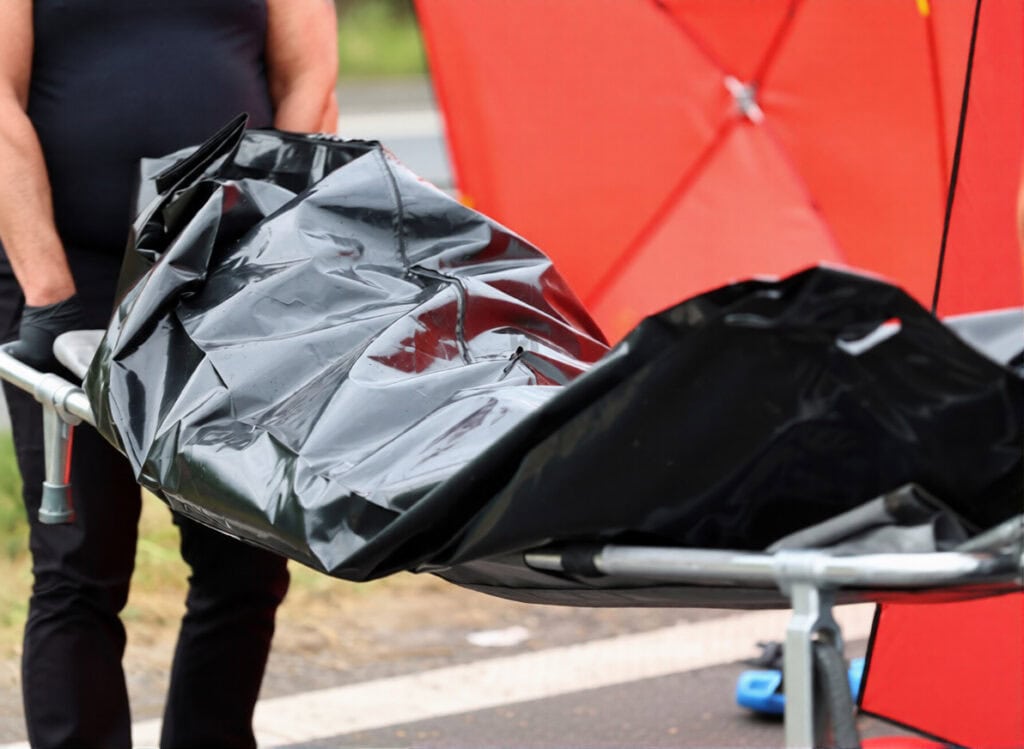
5. Handles
Handle quality affects both worker safety and ease of movement. Buyers should verify:
- number of handles
- handle placement
- reinforcement method
- whether the handles are truly load-bearing
CDC guidance for high-risk remains specifically refers to handles that are not sewn on, such as handles reinforced by straps running under the pouch. This highlights the importance of structural support, especially for heavier loads.
6. Size and Weight Capacity
Suppliers should provide clear dimensions and, ideally, a recommended working load. Facilities may need a mix of:
- standard adult sizes
- pediatric sizes
- bariatric sizes
- models compatible with local trays, trolleys, and vehicles
7. Identification Features
An ID pocket, tag loop, or documentation sleeve helps support traceability and reduces handling mistakes. This is especially helpful in mortuary, forensic, and disaster settings where accurate identification must be maintained throughout transfer and storage.
Key Features Checklist
Before placing an order, check whether the product clearly specifies:
- material type
- thickness in mil or microns
- seam type: sewn, heat-sealed, or welded
- zipper length and closure quality
- number and reinforcement of handles
- ID pocket or tag method
- available sizes
- leak-resistant or leak-proof performance claims
- exterior cleaning compatibility
- storage and disposal instructions
How Mortuary Body Bags Are Used Safely
Proper use is just as important as the product itself.
Preparation
Staff should follow facility procedures for PPE and infection control before handling remains. OSHA’s Bloodborne Pathogens standard applies where workers may have occupational exposure to blood or other potentially infectious materials, and OSHA has also clarified that human remains can present similar exposure concerns.
Transfer
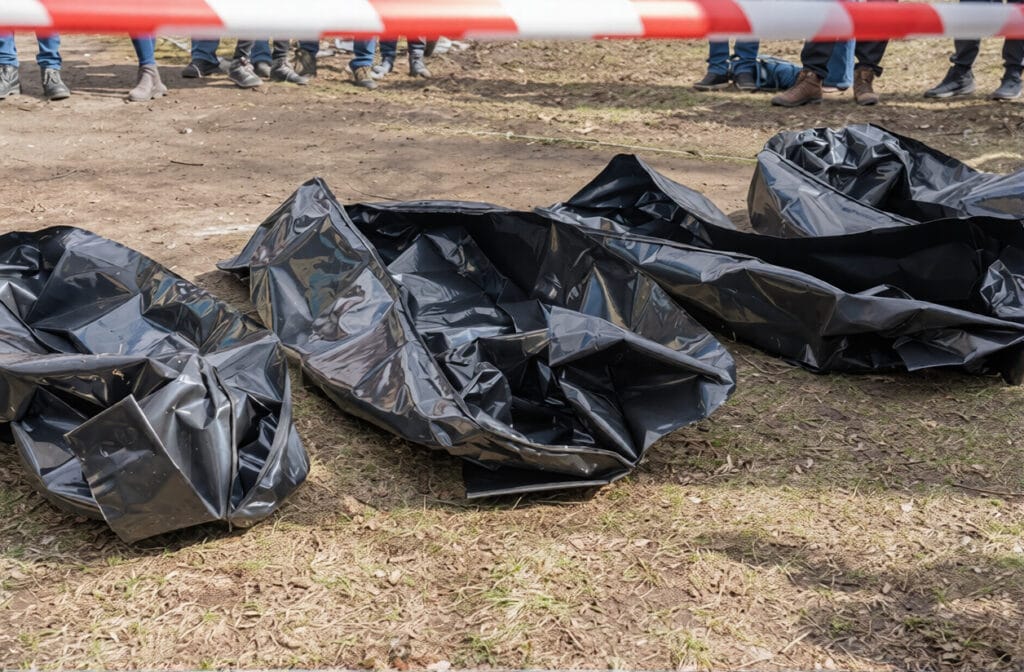
The body should be moved in a way that avoids dragging, sharp-edge contact, or uneven load stress. Using a transfer sheet, stretcher, or lifting aid can reduce the chance of tearing the bag.
Sealing
After placement, the zipper or closure should be fully engaged and checked visually. Identification should be attached according to internal procedure.
Transport
The bag should be transported on appropriate equipment such as a trolley, stretcher, or tray. The bag itself should not be treated as a substitute for safe transport equipment.
Post-Handling
If the bag exterior becomes contaminated, staff should follow site cleaning and disinfection procedures. OSHA’s broader bloodborne pathogen requirements reinforce the importance of proper work practices, PPE, and housekeeping controls when exposure risk exists.
Common Buying and Usage Mistakes
Choosing by Thickness Alone
Thickness matters, but seam quality, handle strength, and closure reliability matter just as much.
Ignoring Handle Construction
Weak or poorly attached handles are a major failure point during lifting.
Treating “Leak-Proof” as a Guaranteed Standard
Not all supplier claims mean the same thing. Ask how the claim is supported.
Using One Model for Every Scenario
Routine transfer and disaster response do not always require the same product.
Skipping Sample Testing
A short sample review often reveals zipper issues, balance problems, or weak handle attachment that are not obvious in a catalog.
Procurement Tips for Medical and Emergency Buyers
A mortuary body bag should be purchased as a safety-critical supply, not as a generic plastic item.
Recommended Procurement Flow
- Define the use scenario
Routine hospital transfer, high-fluid-risk handling, pediatric use, bariatric handling, disaster stockpile, or forensic use. - Set minimum specifications
Material, dimensions, seam type, closure, handle count, ID features, and packaging. - Request technical documents
Ask for a datasheet, sample photos, instructions for use, and any available test information. - Evaluate samples before bulk ordering
This helps reduce procurement risk. - Check lead time and MOQ
Custom sizes, printing, or colors may increase lead times.
FEMA planning resources recognize that body bag demand can become a significant operational issue during large-scale incidents, which is why advance planning and stock management matter.

Simple Sample Evaluation Method
A basic internal product review can include the following:
Step 1: Visual Inspection
Check seams, corners, zipper alignment, and handle attachment.
Step 2: Closure Test
Open and close the zipper several times to confirm smooth function and full closure.
Step 3: Controlled Leak Check
If site procedure allows, perform a limited internal liquid test to inspect for seepage at seams or zipper lines.
Step 4: Load Check
Use a safe substitute weight to evaluate lifting stability and handle performance.
Step 5: Document Review
Confirm that the actual sample matches the written specifications.
Simple Supplier Scorecard
| Criterion | 1 = Poor | 3 = Acceptable | 5 = Strong |
|---|---|---|---|
| Material quality | Inconsistent or flimsy | Standard quality | Robust and consistent |
| Seam quality | Weak or uneven | Acceptable | Clean and reliable |
| Zipper performance | Snags or gaps | Functional | Smooth and secure |
| Handle strength | Weak attachment | Usable | Strong and reinforced |
| Identification feature | Missing or awkward | Basic | Clear and practical |
| Overall fit for use | Limited | Suitable | Well matched to need |
Compliance and Guidance: A More Accurate Way to Say It
Instead of writing that all body bags must meet one universal global standard, it is more accurate to say:
- WHO guidance supports using nonporous body bags and leak-control measures where appropriate.
- CDC gives detailed design recommendations for certain high-risk infectious remains, including welded seams, top-position zippers, and strong handling features.
- OSHA focuses on worker exposure to blood and other potentially infectious materials, which makes proper containment, PPE, and safe handling procedures highly relevant.
- FEMA emphasizes mass fatality preparedness, resource planning, and demand forecasting rather than one universal body bag product specification.
That wording sounds more professional, and it is also safer from a compliance perspective.
Conclusion
Choosing the right mortuary body bag is about selecting the right balance of containment, strength, lifting safety, identification support, and fit for the intended environment. For routine hospital or mortuary use, a standard high-quality bag may be enough. For trauma, decomposition, infectious-risk handling, or disaster response, buyers should pay closer attention to non-porous materials, welded seams, secure zippers, reinforced handles, and realistic sample evaluation. The most reliable buying decisions come from matching product design to operational need, then verifying performance before placing a large order.
From Better Specifications to Smarter Procurement
The right mortuary body bag is not the one with the most aggressive marketing claim. It is the one that matches your real use case, supports safe handling, controls leakage risk, and fits your day-to-day transfer or storage workflow.
If you are sourcing mortuary body bags for hospital transfer, mortuary operations, emergency response, or distributor supply, Jiekang can support sample evaluation, OEM/ODM customization, and configuration matching before bulk ordering. We can help you compare options for size, material, seam type, zipper design, handle layout, ID features, and packaging based on your actual application.