
Introduction
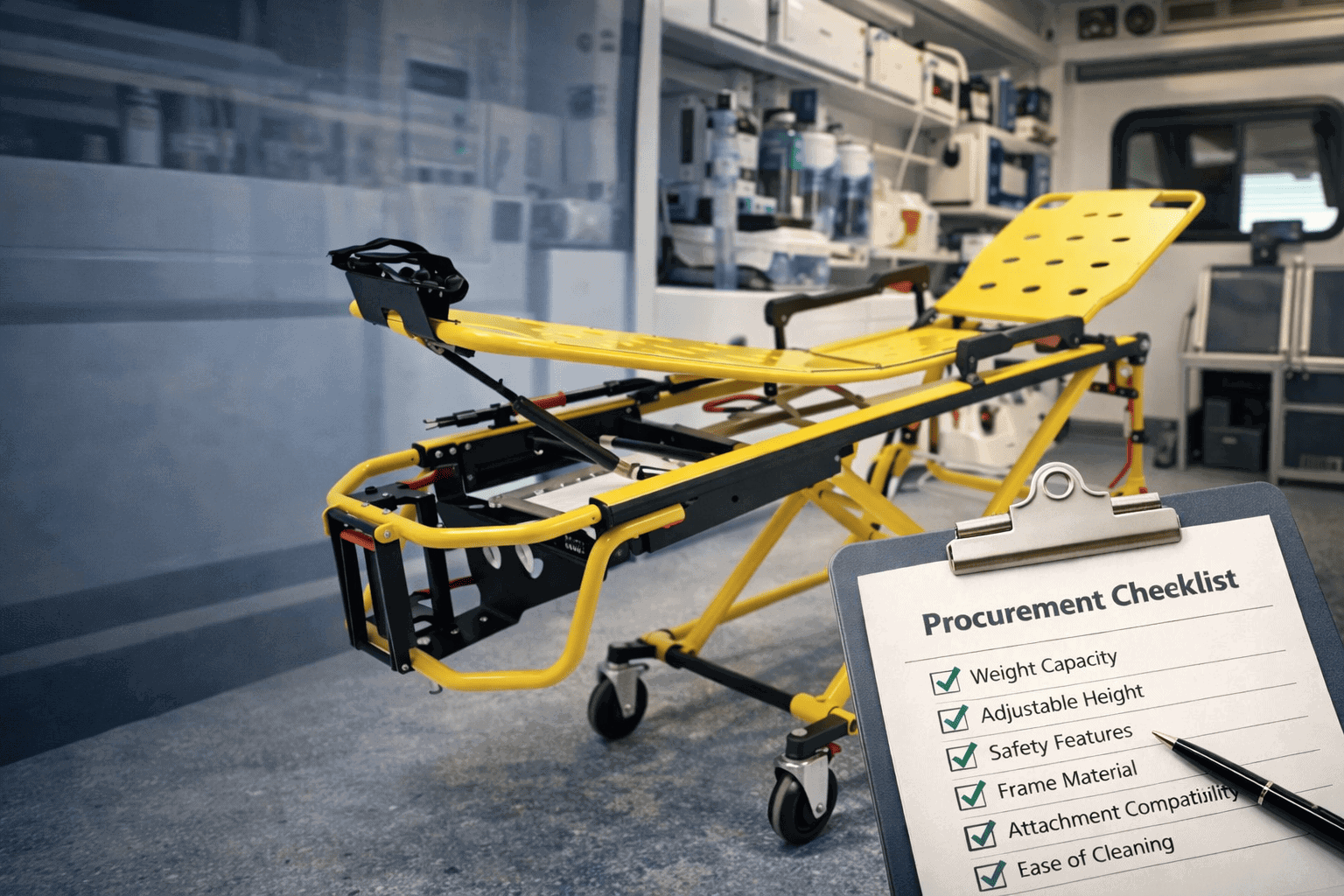
For most ambulance stretcher purchases, the biggest risk is not the unit price. It is unclear requirements.
Two suppliers may both claim they “meet the specification,” yet their products may behave very differently in real use. One stretcher may load smoothly into the vehicle, while another requires more adjustment. One may be easy to clean between calls, while another traps dirt in straps, rails, or joints. One may have readily available replacement parts, while another creates downtime when parts wear out.
That is why buyers need more than a feature list. They need a procurement document that defines requirements, evidence, and acceptance checks.
This article explains what to include in ambulance stretcher procurement specifications, what documents to request from suppliers, and how to run a simple sample evaluation before making a final decision.
The goal is simple: buy a stretcher system that performs consistently in real field conditions—not just on paper.
What Buyers Should Include in Ambulance Stretcher Specifications
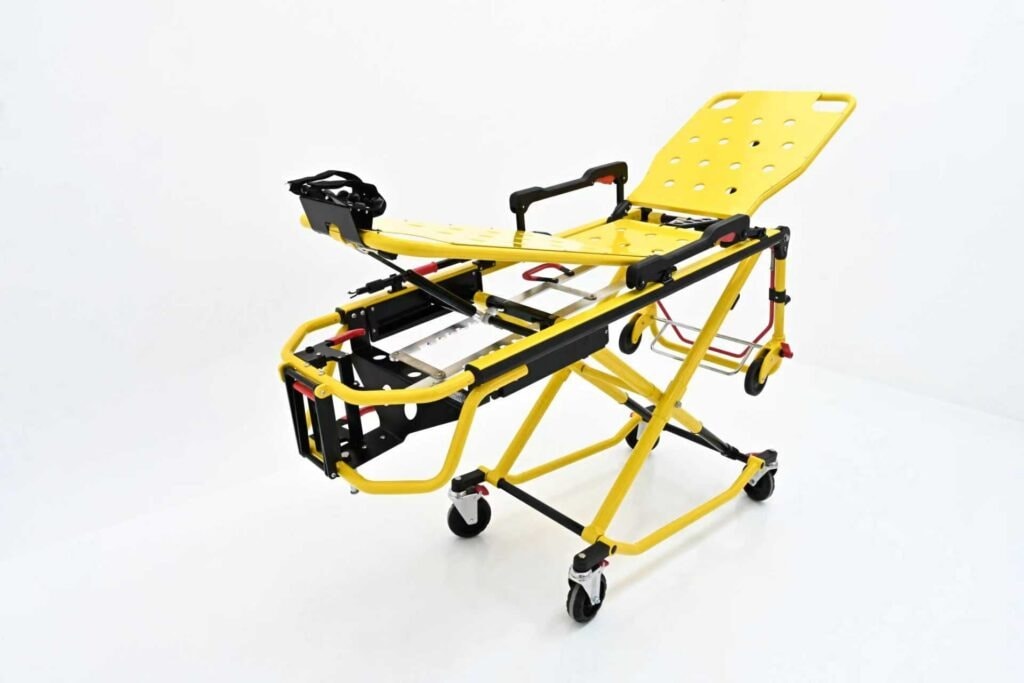
A strong stretcher specification is not just a list of product features. It is a set of requirements plus a way to verify each one.
Start with how your teams actually work every day. Think about loading and unloading, narrow corridors, doorway thresholds, cleaning between calls, routine inspections, and compatibility with ambulance retention systems.
In most cases, buyers should write requirements in five layers:
- Use case and operating constraints
Define where and how the stretcher will be used. This may include fleet type, ambulance deck height, patient profile, stairs, curb cuts, narrow passages, and climate conditions. - Performance requirements
State what the stretcher must achieve. This may include safe working load, height range, stability, maneuverability, restraint system, and loading behavior. - Interface requirements
Define how the stretcher must work with vehicle mounts, retention systems, accessories, spare parts, and related equipment. - Hygiene and reset requirements
Clarify cleaning expectations, disinfection workflow, drying time, and whether surfaces and soft goods fit your daily reset process. - Documentation and training deliverables
Require the right support materials, such as IFUs, pre-use checklists, maintenance schedules, training videos, and spare parts lists.
If a requirement cannot be tested or verified, it is probably not a real requirement. It is just marketing language.
Specification Checklist Table for Buyers
| Spec Area | What to Specify | How to Verify | Common Failure |
|---|---|---|---|
| Safe working load (SWL) | Define the minimum SWL and clearly state what is included, such as patient, mattress, and accessories | Manufacturer IFU, technical data sheet, manual excerpt | SWL is listed, but included load is not defined |
| Operator minimums | Define the required number of trained operators for occupied loading and unloading | IFU/manual statement | Buyers assume powered means one-person operation |
| Vehicle retention interface | Define mount type, fastener compatibility, and vehicle integration requirements | Compatibility statement, mount documentation, vehicle integration plan | Stretcher is purchased before retention compatibility is confirmed |
| Restraint system | Specify restraint points, buckle style, replacement straps, and inspection expectations | IFU, spare parts list, training checklist | Strap system is not standardized and replacements are hard to source |
| Handling and maneuverability | Define expected performance at thresholds, turns, height adjustment, braking, and wheel control | Sample drill test and supplier demonstration | Feature list sounds good, but real handling is inconsistent |
| Cleaning and disinfection | Define surface cleanability, material compatibility, and realistic reset workflow | Cleaning instructions, disinfection guidance, compatibility statement | Product is described as easy to clean, but has hidden traps and hard-to-reach areas |
| Spare parts and wear items | List required parts such as straps, buckles, pads, wheels, casters, and batteries if powered | Spare parts catalog, lead times, MOQ, service support details | Buyers ignore wear items, then face downtime later |
| Inspection and preventive maintenance | Require a pre-use inspection checklist and preventive maintenance schedule | Maintenance checklist, service documentation | No clear inspection routine or service audit trail |
| Training materials | Require quick-start guides, videos, instructor resources, and operator checklists | Supplier training pack | Crews are expected to learn from memory after delivery |
Key Standards and Guidance Buyers Should Reference
You do not need to turn your RFQ into a technical law book. But you should refer to the standards and guidance that support your safety-critical decisions.
1. Crashworthiness and retention
In a crash, stretcher safety is not just about the cot itself. It depends on the full system: the stretcher, the floor mount or fastener, and the patient restraint system.
That is why buyers should reference recognized retention and crashworthiness guidance, including SAE J3027, when defining system compatibility and test expectations.
2. Ambulance platform requirements
If the purchase is linked to new ambulance builds, remounts, or vehicle upgrades, ambulance design standards such as NFPA 1917 may also be relevant. These references help define the baseline expectations for the vehicle environment.
3. Safe patient handling
If you are considering powered or assisted stretcher systems, safe patient handling guidance provides a clear reason why. These tools are not only about convenience. They help reduce manual lifting strain, improve consistency, and support safer crew operations.
4. Infection control
For stretcher surfaces and straps that contact intact skin, infection-control logic matters. Buyers should make sure the product supports approved cleaning and low-level disinfection workflows, and that materials can tolerate the products and contact times used by the organization.
Why Sample Testing Matters
Many stretcher purchases fail because evaluation is too simple. Buyers push the sample around a showroom, fold it once or twice, and make a decision based on appearance and price.
That is not enough.
A stretcher should be tested in the same kind of situations your crews will face in real work. The goal is not just to see whether the product functions. The goal is to see whether crews can use it safely, consistently, and efficiently.
Sample testing helps buyers identify problems early, such as:
- poor maneuverability in tight spaces
- unclear retention engagement
- slow cleaning and reset
- awkward restraint checks
- hidden training needs
- missing spare parts or incomplete documentation
A two-hour sample evaluation can prevent years of inconsistent handling and avoidable operational problems.
Simple Sample Validation Drill Lane
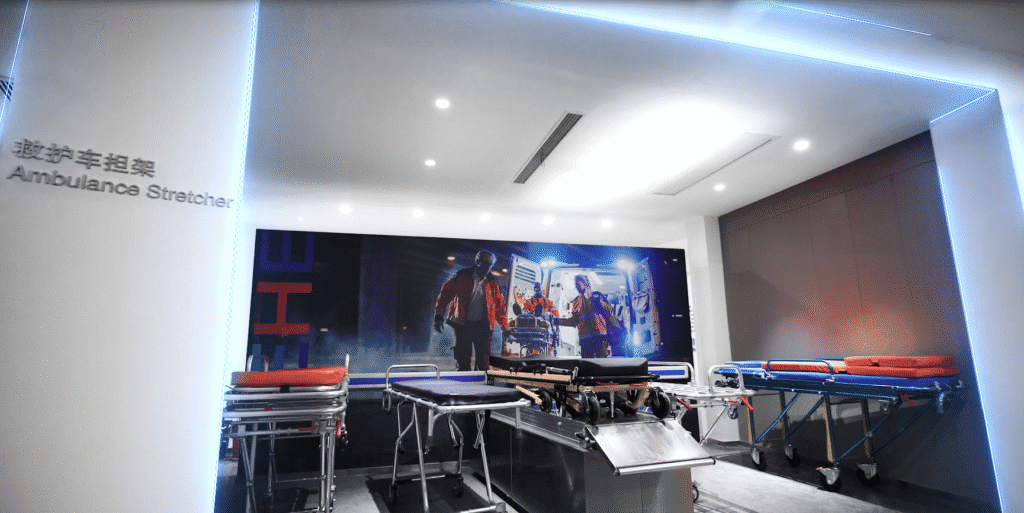
A practical drill lane is one of the best ways to compare suppliers fairly. Use the actual crew mix you expect in the field, and test under realistic conditions.
Step 1: Staging Check
Start with a cold start. Confirm that straps, accessories, and basic setup are ready for use. This shows whether the stretcher arrives in a practical, field-ready condition.
Step 2: Securement Routine
Apply patient restraints and begin movement. Then check whether crews naturally re-check the restraints after motion starts. A good system supports a repeatable routine.
Step 3: Threshold and Turn Test
Move through a narrow doorway, a tight turn, and a small threshold or curb transition. This reveals how the stretcher behaves in common real-world obstacles.
Step 4: Loading and Retention Verification
Load and unload the stretcher using the actual vehicle setup or a representative mount. Require a clear retention confirmation step, ideally with a two-person check if your operation requires it.
Step 5: Cleaning and Reset
Wipe down the stretcher, inspect rails and straps, and return it to ready status. This is where buyers often discover hidden cleaning traps, slow reset steps, or awkward strap staging.
Simple Scoring Rubric
To keep the evaluation objective, score each supplier using the same rubric.
| Category | 0 | 2 | 4 |
|---|---|---|---|
| Handling control | Unstable or difficult | Acceptable control | Smooth and controlled with minimal correction |
| Securement quality | Loose or inconsistent | Secure | Secure and consistently re-checked |
| Loading/retention verification | Assumed, not confirmed | Confirmed once | Clearly verified every time |
| Cleanability and reset speed | Slow or impractical | Workable | Fast, simple, and no hidden cleaning traps |
| Documentation fit | Incomplete | Adequate | Trainer-ready with full support pack |
This makes the decision more practical. The best stretcher is not always the one with the longest feature sheet. It is the one your teams can use safely and consistently every day.
Procurement Risk-Control Checklist
Before publishing your RFQ, review the points below:
- Every requirement has a verification method
- SWL clearly states what is included
- Operator minimums are defined for occupied loading/unloading
- Retention and vehicle interface are clearly specified
- Cleaning and disinfection requirements match your real workflow
- Spare parts and lead times are included
- Training materials are part of the deliverables
- Sample testing is required before final award
This checklist helps buyers avoid vague specifications and reduces the chance of costly surprises after rollout.
Four-Step Procurement Flow
A simple procurement process usually works best:
- Define
List operating scenarios, vehicle interfaces, and cleaning constraints. - Specify
Write requirements and attach a verification method to each one. - Validate
Request samples and run the drill lane with a scorecard. - Scale
Finalize the award, service terms, spare parts, and training rollout.
This approach keeps the process practical and easy to manage.
RFQ Template
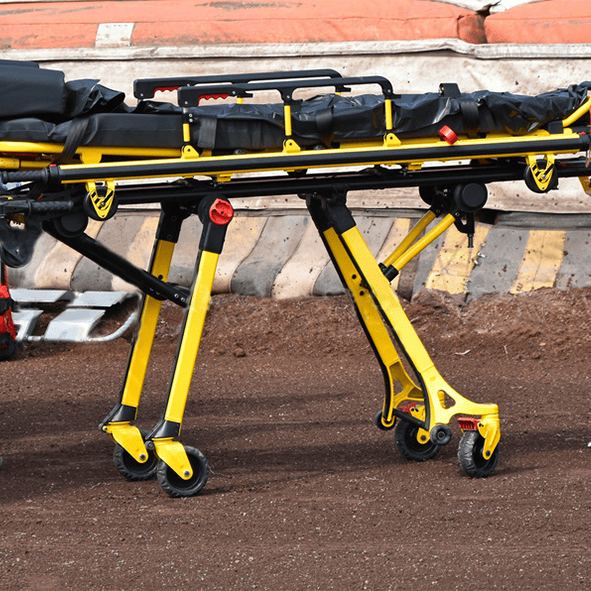
Subject: RFQ — Ambulance Stretcher Procurement Specifications
Buyer type: [EMS / hospital / distributor / government / ambulance manufacturer]
Use scenarios: [urban / rural / stairs / narrow corridors / bariatric / climate]
Required stretcher type: [powered / manual / stair chair / scoop / basket]
Quantity: [ ]
Delivery location: [ ]
Minimum SWL: [ ] kg / [ ] lb
Included load definition: [patient + mattress + accessories]
Operator minimums for occupied loading/unloading: [ ]
Vehicle retention constraints: [vehicle model + fastener type]
Restraint requirements: [strap points + buckle type + replacement requirements]
Cleaning/disinfection requirements: [workflow + approved products + contact times]
Documentation required: IFU, inspection checklist, PM schedule, spare parts list
Training deliverables required: quick-start guide, video, trainer guide, drill checklist
Sample required: [Yes / No]
Sample evaluation date: [ ]
Warranty/service requirements: [terms + response time + spare part lead time]
Conclusion
Ambulance stretcher procurement is a system decision, not just a product decision.
A buyer must look at safe working load, retention compatibility, operator requirements, restraint consistency, cleanability, spare parts, and training support. These factors directly affect real-world use, crew performance, and lifecycle cost.
The most effective way to reduce procurement risk is simple: write clear requirements, attach a verification method to each one, and test sample units in realistic conditions before award.
In short, the best stretcher is the one that works safely, fits your vehicles, cleans quickly, and performs consistently across crews.
From Better Specs to Better Field Performance
The best stretcher specification is the one that reduces ambiguity before award and reduces handling problems after delivery.
At Jiekang, we supply rescue stretchers, spine boards, and related emergency products with support for sample evaluation, OEM/ODM customization, and procurement documentation. If you are reviewing options for ambulance projects, public tenders, or distributor supply, send us your required configuration and use case, and we will help you compare suitable solutions before you scale.