
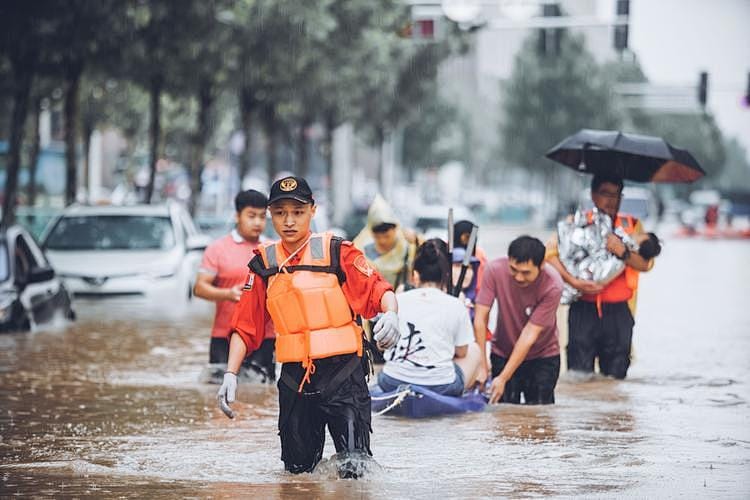
Flood response is not about owning more equipment—it’s about deploying the right combination of tools fast, safely, and repeatedly under unstable conditions.
For government agencies and organized rescue teams, a flood rescue kit must support field deployment, not warehouse storage.
This guide walks through how to assemble a flood rescue kit for real operations, focusing on equipment categories, selection logic, and deployment considerations used by professional response teams.
It is written for project procurement, emergency planners, and rescue coordinators who need a repeatable, scalable setup, not a consumer survival kit.
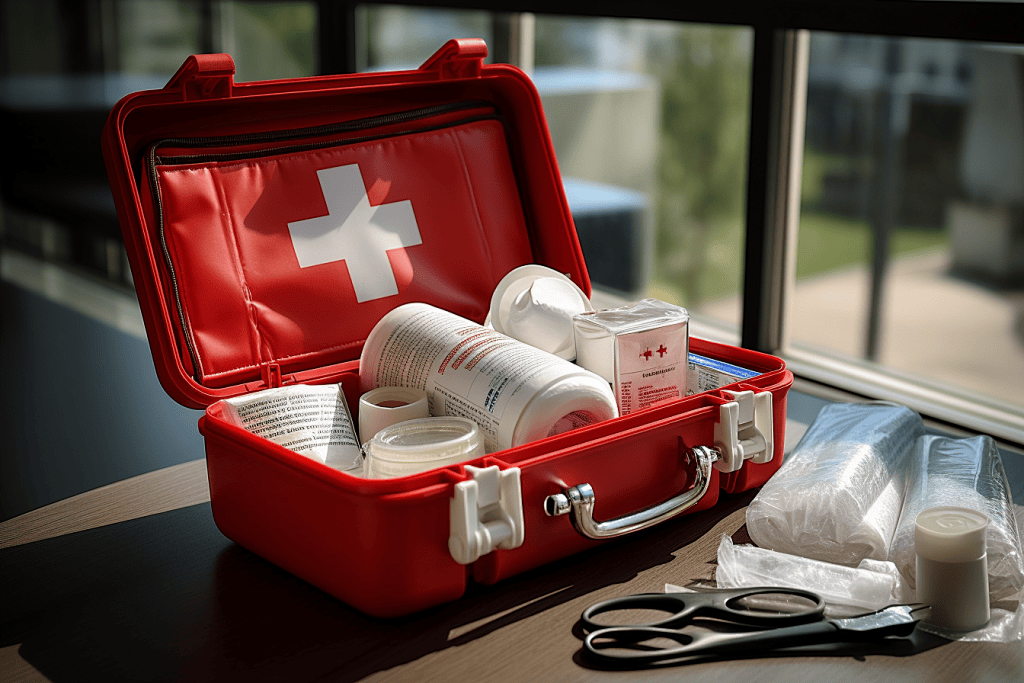
What a Flood Rescue Kit Is
A flood rescue kit is not a single bag or boxed product.
It is a modular equipment system designed to support:
- Rapid deployment from vehicles or staging areas
- Operations in moving or contaminated water
- Victim contact, stabilization, and short-distance transfer
- Fast reset and redeployment for multi-day incidents
For government and rescue teams, the goal is standardization, so different crews can operate the same way under pressure.
Core Design Principles for Government Flood Response Kits
Before listing equipment, it’s important to define the principles behind a proper flood rescue kit.
A field-ready kit must be:
- Modular (equipment grouped by function, not randomly packed)
- Easy to train (clear use logic, minimal assembly)
- Durable in wet, muddy, and contaminated environments
- Easy to inspect, clean, and reset after each mission
Procurement decisions should support long-term readiness, not one-time deployment.
Core Modules in a Flood Rescue Kit
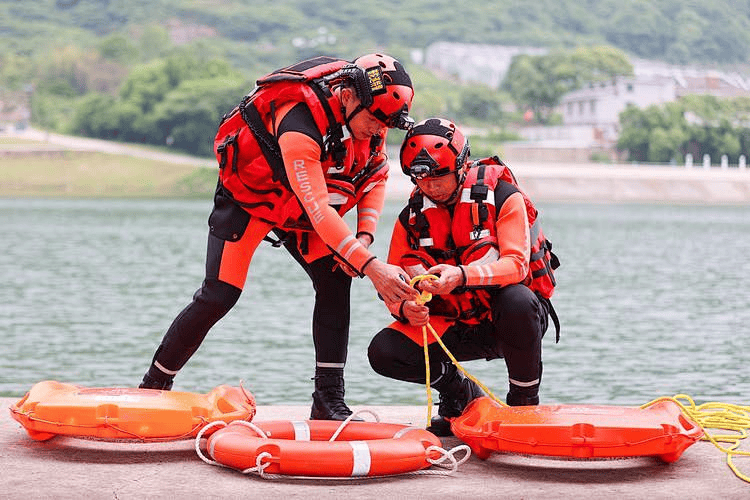
Reach and Throw Rescue Module
This module enables rescue without entering the water whenever possible.
It is the first-line response in many flood scenarios, especially in unstable currents or collapsed infrastructure.
Typical equipment includes:
- Lifebuoys or rescue rings with floating lines
- Throw bags or throw lines for distance rescue
- Carabiners or connection hardware (if required by SOP)
Selection notes:
- Lines must float and remain visible in muddy water
- Equipment should be deployable with gloves
- Storage should allow immediate access, not unpacking
Personal Safety and Flotation Module
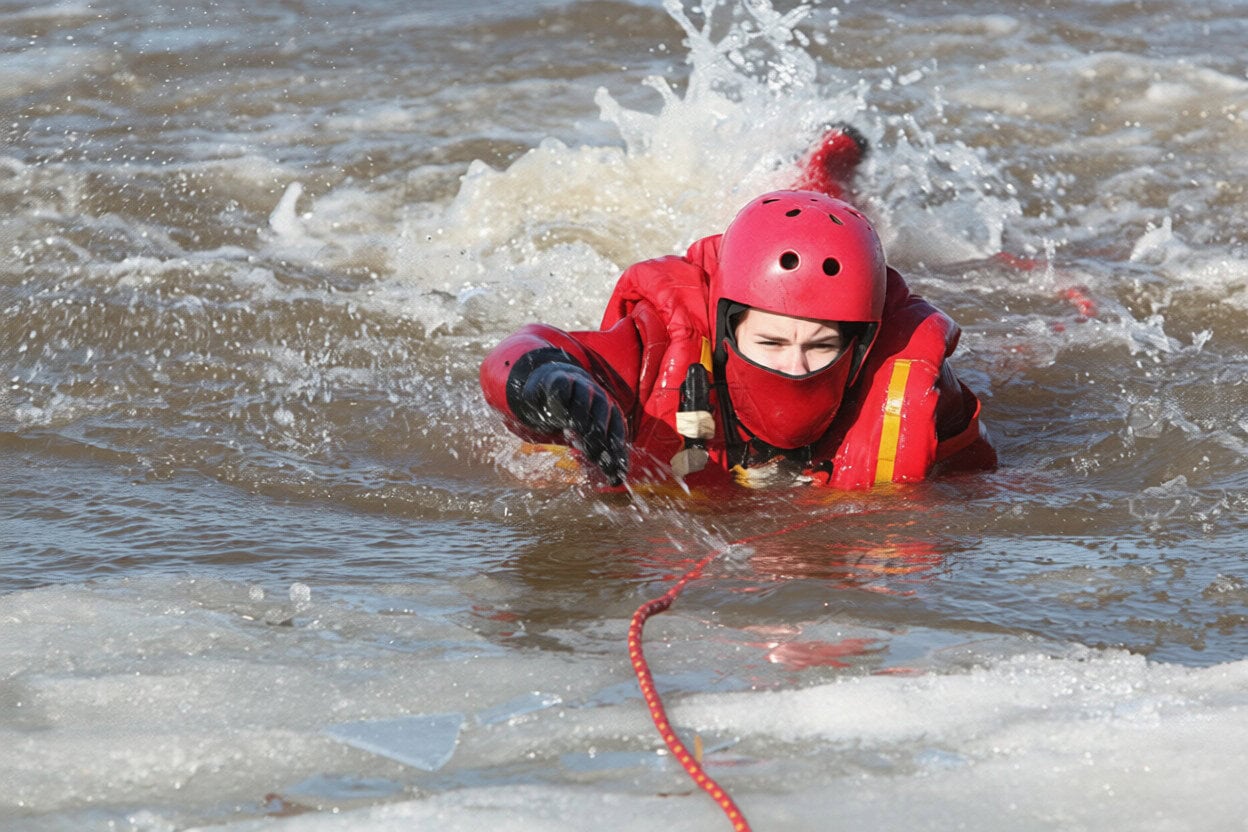
Responder safety is non-negotiable in flood operations.
This module protects personnel operating near or in moving water.
Typical equipment includes:
- Personal flotation devices (PFDs / life jackets)
- Helmets suitable for water and debris environments
- High-visibility apparel or reflective elements
Selection notes:
- PFD sizing should support layered clothing
- Fast donning and secure adjustment are critical
- Equipment should dry quickly and resist odor buildup
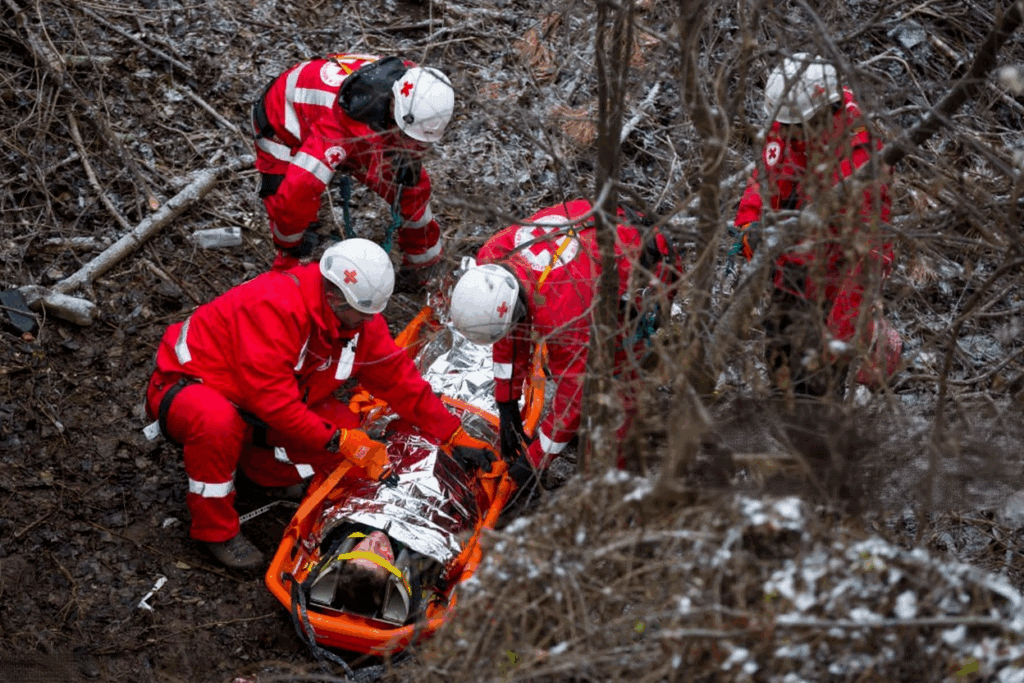
Patient Contact and Extraction Module
Once contact is made, control and stabilization matter more than speed.
Typical equipment includes:
- Rescue cans or flotation aids for in-water contact
- Soft stretchers or scoop stretchers for confined access
- Spine boards or floating boards where applicable
Selection notes:
- Handles and straps must be usable with wet gloves
- Devices should minimize unnecessary patient movement
- Floating capability can be a major advantage in flood zones
Patient Transfer and Transport Module
Flood rescue often involves short-distance movement, not ambulance transport.
Typical equipment includes:
- Foldable or soft stretchers for stairways and debris areas
- Scoop stretchers for minimal-lift transfers
- Straps and immobilization accessories
Selection notes:
- Weight and compact storage matter for foot access
- Equipment must tolerate repeated washing
- Fast setup reduces exposure time in hazardous zones
Medical and Thermal Support Module
Hypothermia and minor trauma are common in flood rescues.
Typical equipment includes:
- Thermal blankets or emergency blankets
- Basic bleeding control supplies
- Gloves and disposable protective items
Selection notes:
- Waterproof or sealed packaging is essential
- Items should be easy to replenish between missions
Lighting, Marking, and Scene Control Module
Flood response often occurs in low visibility or at night.
Typical equipment includes:
- Waterproof flashlights or headlamps
- Glow sticks or marker lights
- High-visibility tape or tags
Selection notes:
- Battery life and water resistance are key
- Lighting should support hands-free use
How to Assemble the Kit for Field Deployment
The biggest failure point in flood rescue kits is poor packing logic.
Recommended approach:
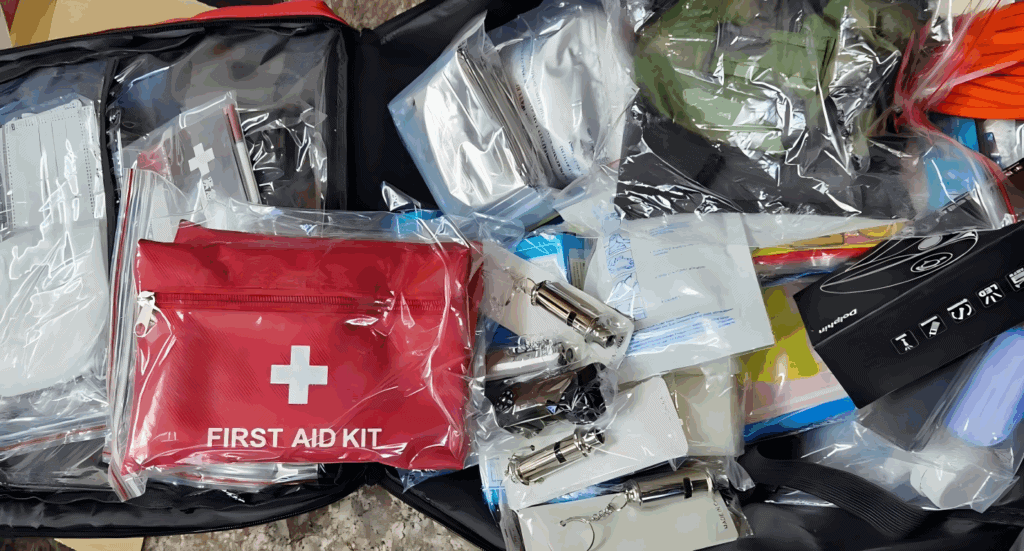
- Assign each module its own bag or container
- Label containers clearly by function
- Store “reach and throw” equipment closest to access points
- Keep medical and thermal items sealed until needed
- Include a laminated inventory checklist in each module
This structure allows partial deployment without unloading the entire kit.
Inspection, Maintenance, and Reset After Deployment
A flood rescue kit must be ready again within hours, not days.
Post-mission reset should include:
- Rinsing all equipment exposed to floodwater
- Drying before storage to prevent mold and corrosion
- Inspecting lines, straps, and locking mechanisms
- Replacing any disposable or contaminated items
- Logging inspection and reset completion
Procurement should prioritize equipment that survives repeated cleaning cycles.
Common Procurement Mistakes to Avoid
Many agencies run into the same issues when assembling flood rescue kits.
Avoid:
- Buying “kits” designed for consumer survival use
- Mixing incompatible equipment from different standards
- Overloading kits with rarely used tools
- Ignoring cleaning, reset, and spare-part availability
A smaller, standardized kit used correctly is more effective than a large, complex one.
Final Takeaways for Government and Rescue Teams
A flood rescue kit is a system, not a product.
For government agencies and organized rescue teams, the priority should be:
- Clear operational logic
- Standardized modules
- Durable, easy-to-clean equipment
- Reliable suppliers who support bulk procurement and long-term use
When built correctly, a flood rescue kit improves response speed, reduces rescuer risk, and supports consistent operations across teams.
We are a factory-direct manufacturer specializing in rescue and emergency response equipment for government projects and professional teams.
If you are planning a flood response program or updating existing kits, we can support bulk supply, OEM configuration, and documentation packages.
- Learn more about our manufacturing capabilities:
https://jiekangrescue.com/about-us/ - Request a quote, catalog, or project discussion:
https://jiekangrescue.com/contact-us/ - Homepage:
https://jiekangrescue.com/