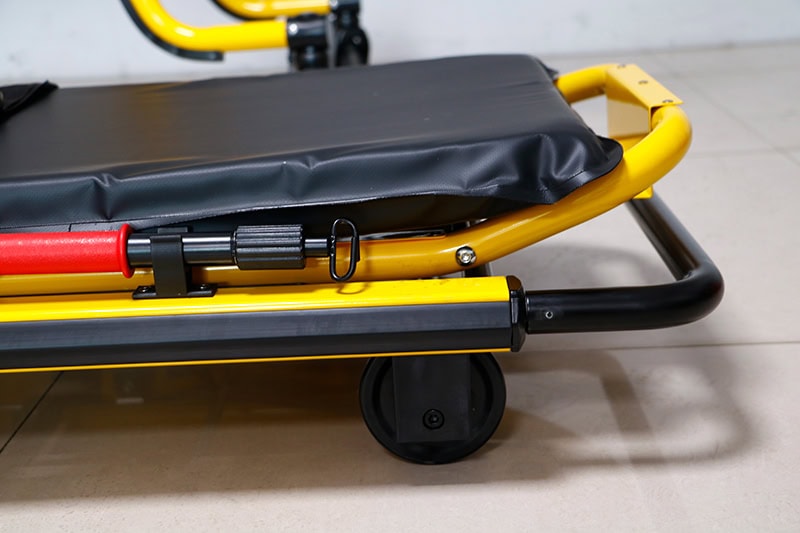
Medical stretcher maintenance checklist for EMS and hospitals: inspection points, cleaning steps, PM schedule, and…
If you’re searching for a medical stretcher maintenance checklist, you’re probably trying to avoid two expensive problems: unexpected failures and infection-control risk. We’ve worked with B2B buyers who need stretchers that stay reliable across real-world use—rough loading, tight corridors, and frequent cleaning. In this guide, you’ll get a practical preventive maintenance routine, a frequency-based schedule, and a copy-ready inspection and care checklist you can hand to your team. Let’s dive right in.
Medical Stretcher Maintenance Checklist: Why preventive maintenance matters
A preventive maintenance routine is cheaper than emergency repairs—and it reduces avoidable safety incidents. In the real world, stretchers take hits: vibration, drops, fluids, disinfectants, and constant rolling over thresholds.
Here’s what PM protects you from:
Sudden wheel/caster failure during transport
Loose fasteners and unstable frames
Locking/height mechanism issues
Strap/rail wear that compromises patient safety
Cross-contamination from inadequate cleaning and disinfection
Also, if your stretcher contacts blood or other potentially infectious materials, OSHA requires that equipment and surfaces be cleaned and decontaminated after contact.
Medical Stretcher Maintenance Checklist: Preventive maintenance schedule
Use this schedule as your baseline, then match it to your call volume and local protocols. (And always follow your own device IFU + facility policy.)
Frequency
Medical stretcher maintenance checklist focus
Typical tasks
Every use / shift
Safety + function
Visual check, locks, straps, wheels, cleanliness
Weekly
Wear + fasteners
Tighten hardware, inspect joints, check casters
Monthly
Deeper function
Load/unload function, brakes, lubrication points
Quarterly
PM inspection
Frame integrity, corrosion, accessory mounts
Annually
Full PM + parts plan
Replace wear parts, document service records
Tip: Many public-sector checklists emphasize checking frame integrity (welds/bends), moving parts, locks, and restraint systems.
Medical Stretcher Maintenance Checklist: Pre-use inspection
If you only do one thing, do this 2-minute pre-use inspection—because it prevents “surprise failures” on the call.
Medical Stretcher Maintenance Checklist: 10-point quick check
Frame: no cracks, bends, or sharp edges
Fasteners: no missing screws/bolts/pins
Moving parts: smooth movement, no grinding
Locks: lock solidly in each position
Wheels/casters: roll smoothly, tread OK
Brakes/wheel locks: engage and hold
Handles/side rails: secure and stable
Straps/restraints: no fraying, buckles work
Mattress/pad: intact cover, no tears
Cleanliness: no visible soil or residue
These checks align closely with real-world EMS inspection sheets (fasteners, moving parts, lock positions, wheels, wheel locks, restraints).
Medical Stretcher Maintenance Checklist: Cleaning and disinfection
Cleaning is not optional “after time permits”—it’s part of safe operations. CDC recommends removing visible organic residue first (cleaning), then performing disinfection with an appropriate product and process.
Medical Stretcher Maintenance Checklist: Routine cleaning workflow (numbered)
PPE on (gloves/eye protection as needed)
Remove visible soil with detergent + water
Rinse/wipe as required by your protocol
Apply facility-approved disinfectant (contact time matters)
Air dry / wipe dry per product label
Reassemble accessories, do a quick function check
Record completion (who/when)
Medical Stretcher Maintenance Checklist: Blood/body fluid spill procedure
When blood or body fluids are present, handle it like a controlled spill—contain, clean, then disinfect. CDC’s environmental cleaning procedures include wearing PPE, confining and wiping up the spill, cleaning thoroughly, then disinfecting with an intermediate-level disinfectant. OSHA also expects decontamination after contact with blood/OPIM.
Pro tip for buyers: choose stretcher surfaces and mattresses that tolerate your disinfectants, or you’ll “buy twice” when covers crack and seams fail.
Medical Stretcher Maintenance Checklist: Lubrication and wear parts
Most stretcher downtime comes from wear parts—especially wheels/casters, brakes, and high-cycle joints.
Medical Stretcher Maintenance Checklist: Replacement triggers
Wheel wobble or uneven rolling
Brake doesn’t hold on slight incline
Locks don’t “click” positively every time
Visible corrosion at joints/fasteners
Strap webbing frays or buckles deform
Keep a small spares kit for high-wear items (casters, straps, pins), especially if you run high call volumes.
Medical Stretcher Maintenance Checklist: Documentation and audit-ready records
If it isn’t documented, it didn’t happen—especially for hospitals, tenders, and fleet-style EMS operations.
What to record:
Inspection date/time + inspector
Issues found + corrective action
Parts replaced (part name/qty)
Cleaning/disinfection log
Annual PM summary
This “logbook mindset” shows up repeatedly in formal PM programs and public checklists.
Medical Stretcher Maintenance Checklist: Which stretchers are easier to maintain?
Not all stretchers are equal when it comes to maintenance time and cleaning workload. For many B2B buyers, “easy to maintain” means:
Smooth, wipeable surfaces
Simple hardware access
Standardized wear parts
Clear accessory compatibility
Predictable spare parts supply
If you’re sourcing rescue and transport models for multiple scenarios, start with a category that covers different mission needs and keeps your procurement simple: Various Rescue Stretcher.
Medical Stretcher Maintenance Checklist: Conclusion + B2B CTA
A consistent medical stretcher maintenance checklist reduces failures, improves safety, and makes your operation audit-ready. If you’re buying stretchers in volume (EMS, hospitals, distributors, government projects), the best next step is to standardize your inspection checklist and choose models designed for frequent use and frequent cleaning.
We’re a factory-direct manufacturer focused on B2B rescue and patient transport equipment—reliable build, OEM/ODM options, and responsive support.
At minimum: a quick check every shift/every use, plus a scheduled PM program (monthly/quarterly/annual) depending on usage and policy.
What’s the most important part of a stretcher inspection?
Locks, wheels/casters, and restraints—because failure in any of these can immediately affect transport safety.
How do you disinfect a stretcher after blood exposure?
Contain the spill, wipe up, clean thoroughly, then disinfect with an appropriate product and follow label contact time—OSHA/CDC both emphasize decontamination after contact with blood/OPIM.
Do we need to keep maintenance records?
Yes—documentation supports safety, accountability, and procurement/audit requirements in many healthcare and public-service settings.
About Carlos
I’m Carlos, founder of Jiekang Medical, dedicated to improving rescue operations with 16 years in the industry.