

Introduction
You’re on scene. The patient had a hard fall or a vehicle crash, and everyone’s looking at you like, “So… are we strapping the head down or not?”
This is where head immobilization matters—not as a “default for everyone,” but as a smart move when the risk is real and the exam isn’t reliable. In this post, we’ll keep it plain: when you should use head immobilization, when you usually don’t need it,

A quick mindset shift: “Immobilize everyone” is old news
Many systems today focus more on reducing unnecessary movement and repeated transfers, rather than immobilizing everyone as tightly as possible. The joint position statement is written specifically for prehospital providers and explains why more agencies are moving toward selective spinal motion restriction (SMR).
On the hospital side, spinal injury management is well covered in the American College of Surgeons (ACS) Best Practices Guidelines for Spine Injury.
Quick Scan: Do We Need Head Immobilization? (YES / NO)
YES — Use head immobilization when any of these are true
Use head blocks + straps as part of SMR if you can’t reliably clear the neck or the risk is clearly high:
- Unreliable exam: altered mental status, intoxication, not cooperative, or communication barriers
- Neuro red flags: numbness, tingling, weakness, abnormal sensation or movement
- Midline neck pain/tenderness: pain on the center of the neck/spine (not just muscle soreness)
- Obvious spine concern: visible deformity or strong suspicion of cervical injury

NO — Head immobilization is often unnecessary when all of these are true
This is where you save time, reduce patient discomfort, and avoid extra handling—without cutting corners.
- Alert and stable: awake, oriented, and not deteriorating
- Cooperative and reliable: you can get a clear history and exam
- No neuro symptoms: no numbness, tingling, weakness, or abnormal sensation/movement
- Low-risk screening: no red flags on your local low-risk criteria, so careful handling is enough
Important note: your local EMS protocol is the law on your ambulance. This post reflects evidence trends—not a replacement for medical direction.
If you decide to immobilize, do it clean and simple
A common mistake is “locking the head” while the torso can still shift. In most workflows, you secure the body first, then stabilize the head, so everything moves as one unit. The ACS spine guideline and the EMS joint statement both reinforce the idea of minimizing motion and avoiding unnecessary transfers.
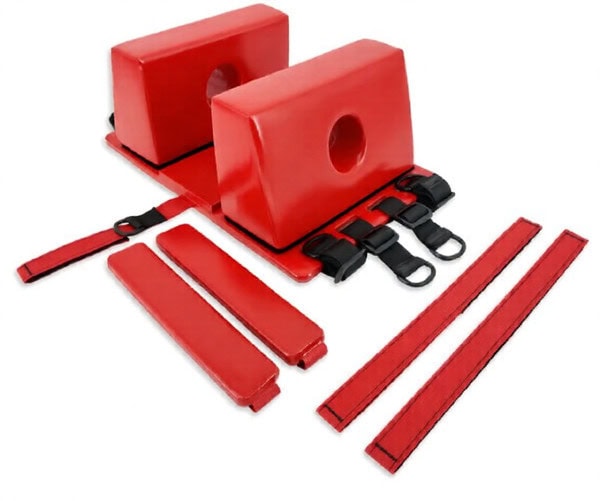
Product snapshot : Jiekang Head Immobilizer
If you’re sourcing head immobilizers for EMS kits, ambulances, or distribution, here’s a quick distributor-ready look at our YJK-16:
Material: high-density plastic (molded design)
Key features: waterproof, easy to clean, metal-free, lightweight (per product sheet)
Clinical-friendly detail: ear observation holes for checking bleeding/drainage without removing the immobilizer
Imaging use: suitable for X-ray/CT/MRI environments (metal-free design)
Unfolded size: 420 × 270 × 140 mm
Net weight: approx. 7.6 kg
Load capacity (lab): ≤159 kg
Suggested use: with a spine board and cervical collar
Next step: get OEM options, pricing, and a fast quote
If you need a head immobilizer that’s easy to standardize, easy to disinfect, and simple to train, we can help you build a clean product lineup for your market.
Learn more at Jiekang Rescue: https://jiekangrescue.com/
Request pricing / samples / OEM (logo & color) here: https://jiekangrescue.com/contact-us/